
What Rowlett Resident Records Confirm
Different records identify different roles. A tax account identifies an owner of record and a parcel, not every person in the home. The Texas voter route helps with one registration-status question, while a complete voter file follows a separate request process and has use limits. Court records can connect a name to a case, but sealed, juvenile, expunged, and protected matters may not appear. A Rowlett resident lookup is strongest when the result gives a county, date, parcel, case number, or other second key that can be checked at the correct office.
| Record | What it can confirm | Where to search | Access |
|---|---|---|---|
| Property account | Tax owner, parcel, situs and mailing address | DCAD or Rockwall property search | Public web search; older data may need a request |
| Recorded document | Grantor, grantee, legal description and recording date | Dallas County Official Records or Rockwall County Clerk | Index access varies; copies and certification come from the clerk |
| Court index | Case number, parties, court, filed date and status | Dallas/Rockwall court routes and Re:SearchTX/TAMES | Public layer can omit confidential material |
| Vital index | Historic birth, death, marriage or divorce index facts | Texas DSHS Vital Statistics | Recent certificates have eligibility and ID rules |
| Historical sources | Older address, phone, family or obituary trail | Rowlett, Dallas, and Rockwall library collections | Reading-room, library-card, microfilm, or digitized access |
When an address is known, begin with the parcel and the county. When only a name is known, use spelling variants and a middle initial before comparing a public court or license result. A former surname, a spouse name, an instrument number, and a year can separate similar names without guessing.
Note: An owner, registered voter, license holder, business officer, court party, and occupant are different roles in Rowlett records.
Route a Rowlett Lookup by County
Rowlett crosses Dallas and Rockwall Counties. Dalrock Road is the practical routing reference the city identifies, with the Dallas side generally west of it and the Rockwall side generally east. That is a starting point, not a substitute for checking the actual parcel, city map, or legal description. The county determines the clerk for a deed, probate file, marriage license, county-court case, and many older records. Rowlett is not a county seat, so the city office does not replace either county clerk.
For a Dallas-side property, use DCAD and the Dallas County Clerk routes. For a Rockwall-side property, use the Rockwall tax/property search and County Clerk. Older material often needs a counter, mail request, library microfilm, or archive instead of the current portal. This county split is the most important geographic check in a Rowlett resident lookup.
Search Rowlett Court Records by Name
County and district courts use the county selected by the address or case, while Rowlett Municipal Court handles Class C matters in the city. No public Rowlett Municipal Court name portal was located. The clerk and counter route is therefore the documented fallback, using a name and date of birth or citation number where appropriate. Dallas County's official search guide supports Smart Search by record number or Last, First Middle name, court location, party criteria, case criteria, phonetic matching, and hearing-date ranges.
Start with the county's record-search hub or Rockwall's judicial route, then compare case type, court, date, and parties. A public result may show case number, style, filed date, court location, status or disposition, and hearings. It may not expose the full file. Certified copies come from the clerk, and archived Dallas cases can require a warehouse search or written request.
The interface recorded for Re:SearchTX/TAMES is shown below. It is a statewide appellate layer that refreshes nightly, not a replacement for a county trial-court record.
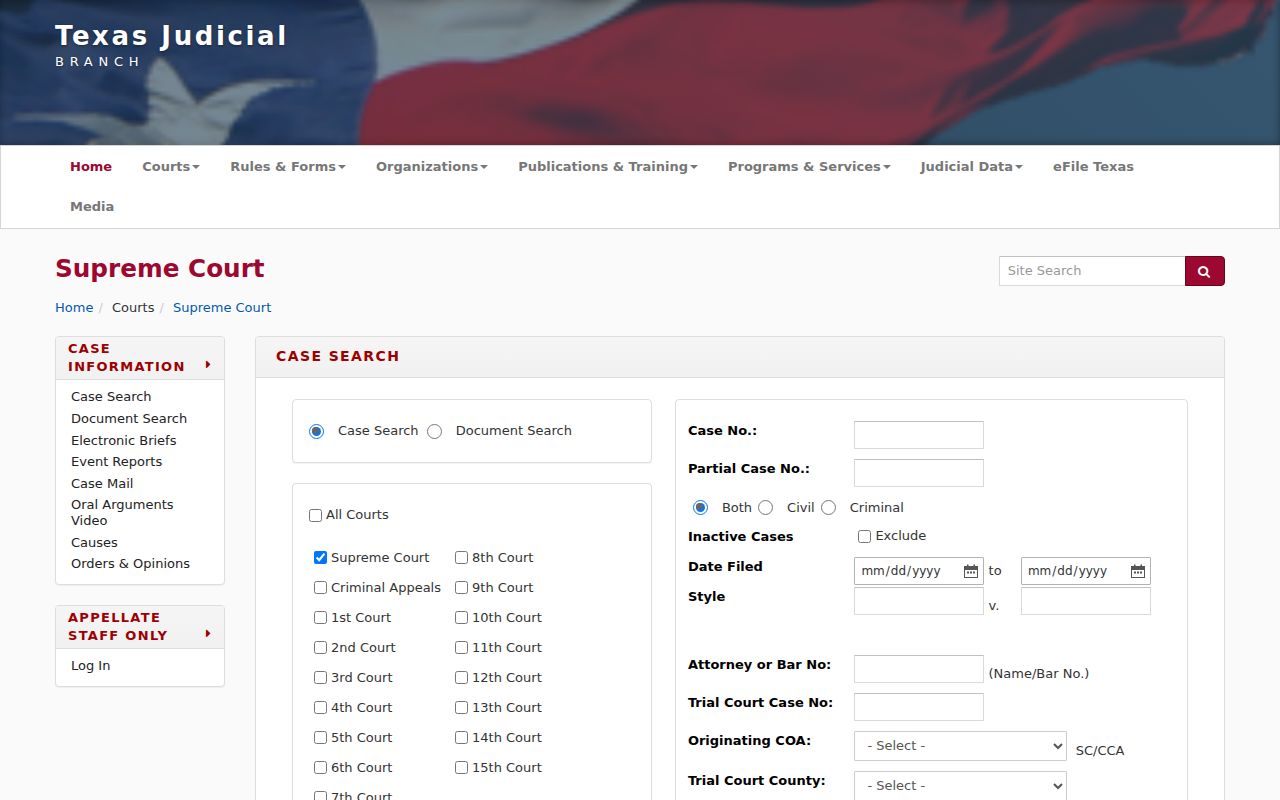
Use a court result as one verification point. Similar names, restricted dockets, and different court jurisdictions are common reasons to confirm with the clerk.
Check Rowlett Voter Status Carefully
Texas provides an individual registration path through its VoteTexas instructions and the linked “Am I Registered?” tool. Research verified that this is an individual status lookup. It did not verify a full return screen or a street-wide search. Do not expect ballot choices, Social Security numbers, a full date of birth, or a list of every voter at an address. Registration is county based, and the usual registration deadline is 30 days before an election.
The captured Texas voter interface is a useful reminder to match a name to the correct county and other lawful record details before drawing any conclusion.
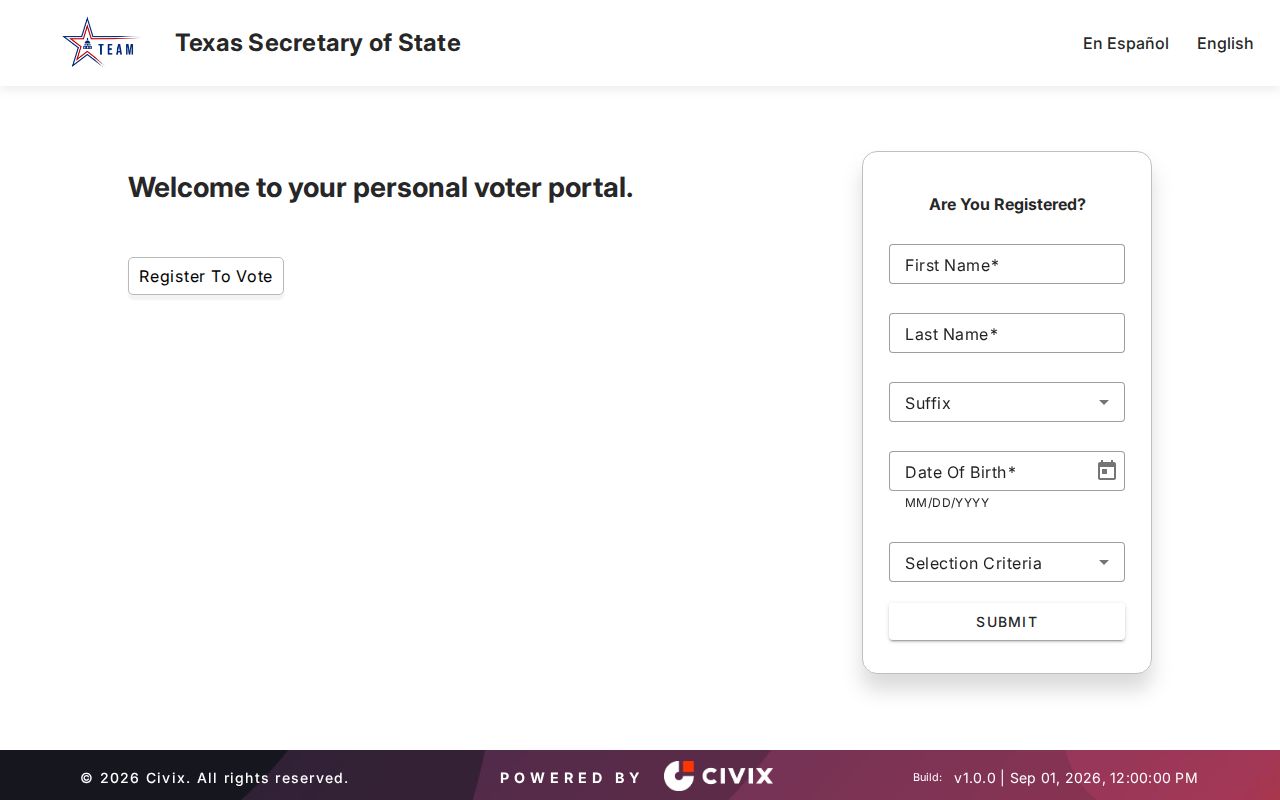
A broader voter file is a different request. Texas Form 24-3 covers public voter information and lists a $5 statewide search, while protected participant information and sensitive identifiers remain confidential.
Verify a Rowlett Resident Across Records
A careful Rowlett resident lookup moves from a public name hit to records that share a stable detail. Use the county and property address as controls. Do not rely on a mailing address alone, because it can belong to an owner, agent, or tax-bill destination away from the parcel. The physical property address is the situs address. It is useful for locating the parcel, while the legal description controls the deed trail.
- Normalize the person's name, including middle initial, former surname, nickname, and likely spelling variants. Record the address and the county if either is already known.
- Search the correct property system by owner or address. Save the account number, situs address, legal description, and the date of the public record.
- Search the county deed index for the owner as grantor or grantee, then compare the instrument date and legal description to the property account.
- Use a court, license, voter-status, directory, or vital-index result only as a second check. For a certified document, request it from the clerk or DSHS that holds it.
- Docket
- A court's running list of case events, filings, settings, and status. Public dockets may hide protected details.
- Index and image
- An index is the searchable list of record fields. An image is the scanned document itself, which may need a clerk request or have redactions.
- Certified copy
- A custodian-issued copy carrying the office's certification. It is different from a search result or an ordinary printout.
- Situs address
- The physical location of a parcel. It differs from an owner's separate mailing address.
Use Vital Indexes in Rowlett
Texas DSHS provides statewide index and verification paths, while county offices control some local certified documents. The DSHS digital birth index begins in 1925 and the digital death index in 1965. Earlier microfiche begins in 1903. Birth records become public after 75 years and death records after 25 years under Government Code section 552.115. Recent certified records require a qualified applicant, identification, and the applicable fee.
DSHS marriage indexes start in 1966 and divorce indexes in 1968. A verification is not the same as the underlying certified record: a marriage license comes from the county clerk that issued it, and a divorce decree comes from the district clerk. Texas events can be ordered through the state route by adult applicants, but research recorded normal processing as 20 to 25 business days and notes that fees are nonrefundable. DSHS asks users to confirm the current fee and form before payment.
The DSHS online vital-record application begins with the record type and order path.
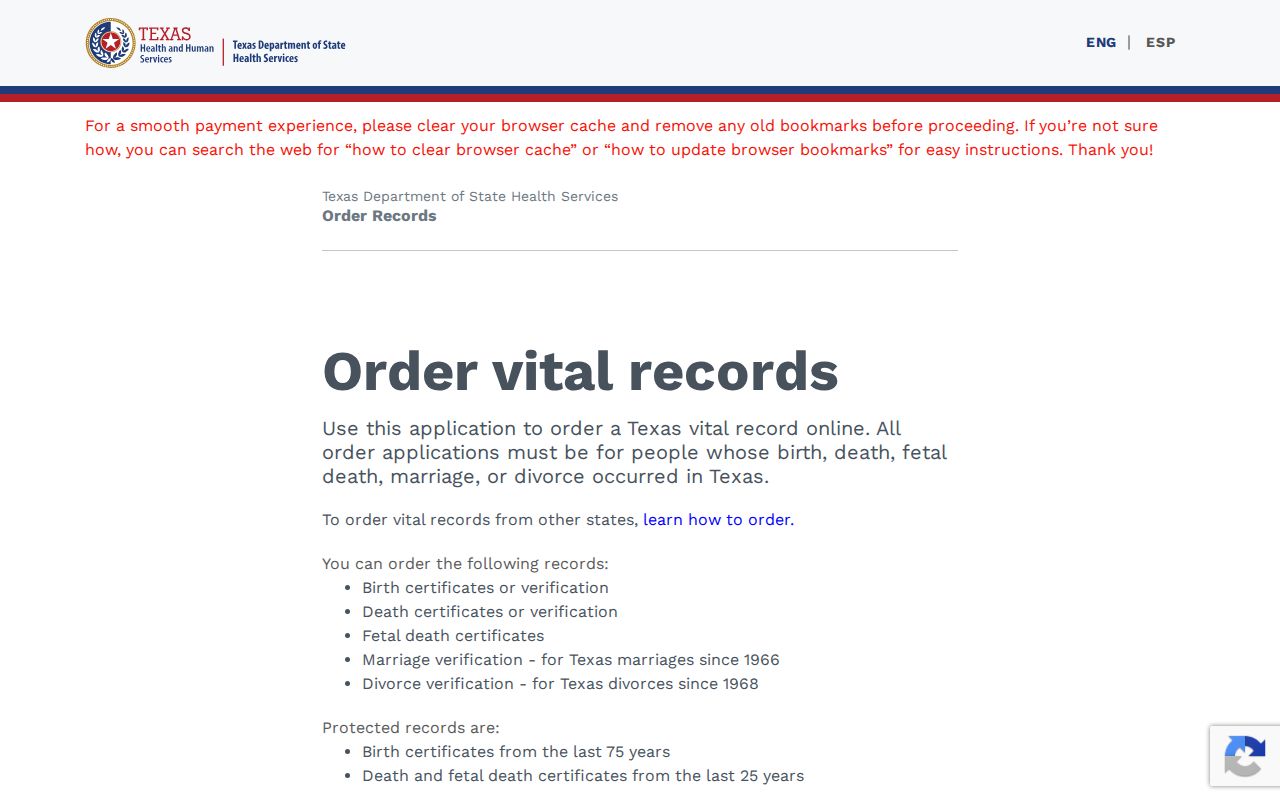
For family-history work, an index can establish a year or county to pursue. It does not override access rules for a recent certificate.
Read a Rowlett Court Result Carefully
A name result is not an identity conclusion. An official Dallas training docket demonstrates the difference between a public result and an authorized case view. Its sample includes defendant name and style, case number, TRN, cause number, custody agency, status, court, prosecutor, setting date and time, and other identifiers that can be restricted. A public party search may return far less. Compare only lawfully available details, such as case number, court, date, and party name.
| Result field | How it helps |
|---|---|
| Case number | Gives the clerk a precise file reference. |
| Style or parties | Helps distinguish people with similar names. |
| Filed date and court | Separates a local case from a different county or jurisdiction. |
| Status or disposition | Describes the case posture, not a complete personal history. |
| Hearing information | May be visible in public results, subject to court restrictions. |
Sealed, expunged, juvenile, adoption, protected family-law, and confidential victim information can be absent. Texas DPS has a separate criminal-history service with account, fee, and matching rules; it should not be confused with a general Rowlett resident lookup.
Trace a Rowlett Family History
Family research often needs an address history rather than a current location. For a former household, regional telephone and criss-cross directories, newspapers, probate files, and public deeds can build a dated trail. Dallas Public Library's History & Archives and Genealogy collections provide directories, maps, yearbooks, family files, funeral and cemetery indexes, and county record deposits. On the Rockwall side, the microfilm room has newspapers, census material, deeds, marriage and probate indexes, court minutes, and birth/death runs.
Record each name, address, phone, spouse notation, year, and source. Then compare the next directory year or census release. The Rockwall Success newspaper reel has a documented 1966 to 1967 gap, so an empty search in that period may call for a date-and-page browse or a second newspaper. The historical regional collections are described in more detail in the Rowlett Directory Book.
Note: Historic directory presence can show a dated address clue, not current occupancy, legal ownership, or a complete household.
Request Missing Rowlett Records
When an online index does not have the needed record, make a narrow request to the office that holds it. The Texas Public Information Act, Government Code chapter 552, covers public-information requests, but it does not require a government body to create a list, answer an open question, or perform new analysis. Rowlett directs city requests through its JustFOIA portal or the City Secretary. The request should state the existing record type, address or name, date range, permit or case number, and desired format.
The City Secretary is the city custodian for municipal records. County clerks handle recorded documents and county-held materials, and court clerks handle court copies. For Dallas recorded documents, the request form supports mail or counter use and asks for details such as grantor or grantee, instrument number, document type, and property address. If production needs more than ten business days, Rowlett should provide a release-date notice. Confidential information and statutory exceptions still apply.
Limits of a Rowlett Resident Lookup
Texas public records are not a complete list of everyone at an address. Children, visitors, unlisted household members, utility customers, postal forwarding data, and DMV address data are not general resident rolls. The Texas Address Confidentiality Program protects qualifying participants' residence address, Social Security number, Texas driver-license or ID information, and related voter-registration information. Voter data also has protected categories and statutory use rules.
Lawful personal use. Use Rowlett records for family history, civic research, estate questions, and careful verification. Do not use public information to stalk, harass, intimidate, or harm anyone. Texas Penal Code section 42.072 addresses stalking.
Rockwall County also warns that its online property database is not the official repository and may be incomplete or altered. Its HB 4350 redaction and omission notice took effect June 20, 2025. If a record is wrong, contact the custodian named on that record: the appraisal district for an account, clerk for an index or document, election office for registration data, DSHS or county clerk for vital records, and court clerk for a docket issue.